MOTS-c Peptide: Benefits, Dosage & Where to Buy | Union Bio Labs
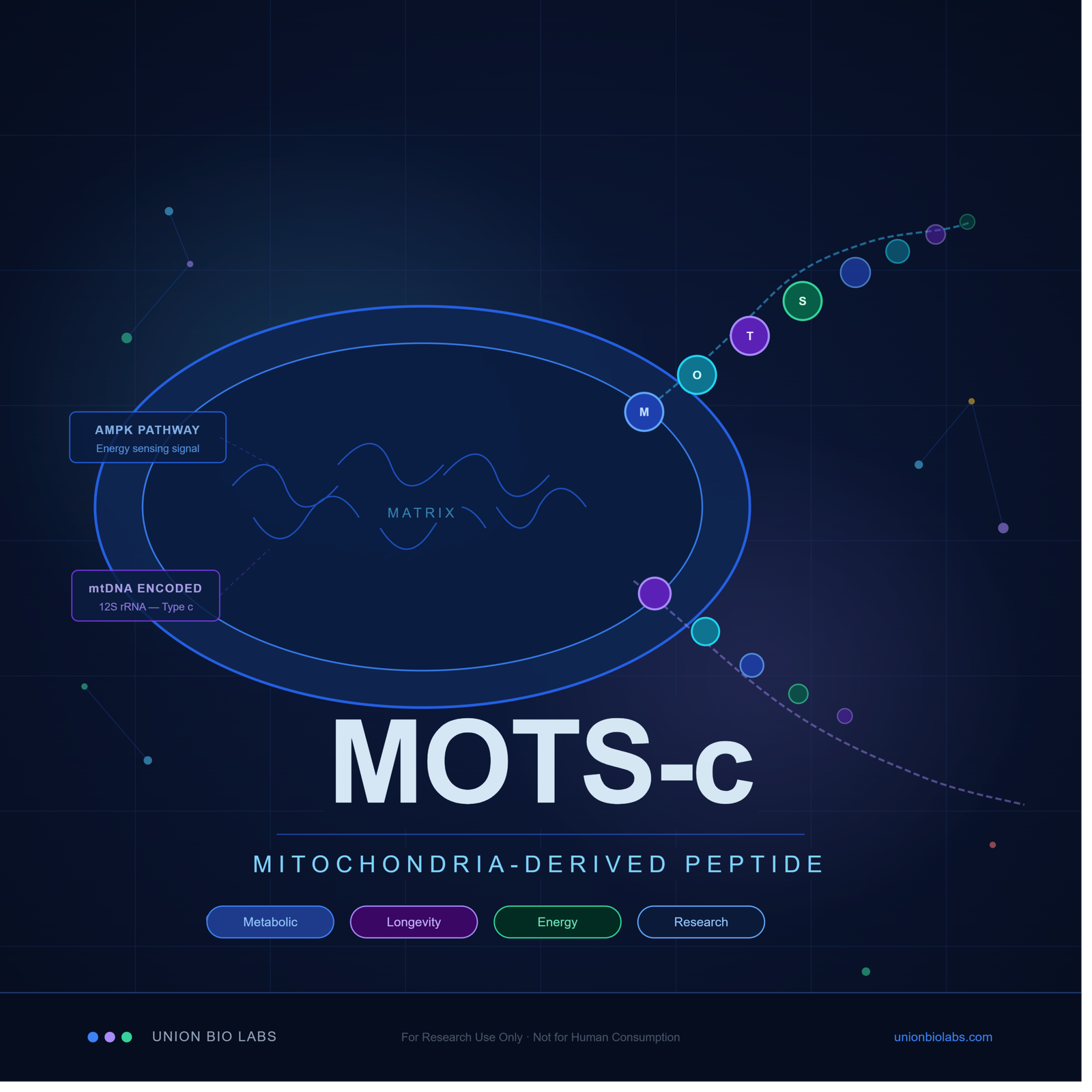
Most peptide research focuses on proteins made in the cell nucleus. But MOTS-c breaks that rule entirely. This small but powerful peptide is encoded in mitochondrial DNA — the part of the cell most people associate only with energy production.
Since it was first identified in 2015 by researchers at the University of Southern California, MOTS-c has attracted growing interest in the fields of metabolic health, longevity science, and exercise physiology. It appears to act like a natural signal inside the body, helping cells respond to stress, regulate energy use, and maintain balance across different biological systems.
This article covers what the current research says about MOTS-c, how it may support the body at a cellular level, what dosage protocols researchers have explored, and what to look for when sourcing peptides responsibly. Whether you are a seasoned researcher or just beginning to explore peptide science, this guide gives you an honest, evidence-grounded foundation.
What Is MOTS-c? Understanding the Mitochondria-Derived Peptide
MOTS-c stands for Mitochondrial Open Reading Frame of the 12S rRNA-c. That is a technical description of where it comes from — a small section of mitochondrial DNA that was previously thought to be non-coding.
When scientists discovered that this region actually produces a functional peptide, it changed the understanding of how mitochondria communicate with the rest of the cell. MOTS-c is now classified as a mitochondria-derived peptide (MDP), a category that has opened an entirely new area of research.
How MOTS-c Differs from Other Peptides
Most therapeutic peptides are derived from nuclear DNA. MOTS-c is unique because it originates in the mitochondria — the organelles responsible for producing ATP, the body’s primary energy currency.
This origin gives MOTS-c a distinct biological role. Rather than simply acting as a hormone or growth factor, it appears to function as a retrograde signal — meaning it travels from the mitochondria back to the cell nucleus to influence gene expression. This process helps the cell adapt to changing energy demands and metabolic stress.
The AMPK Pathway and Cellular Energy Sensing
One of MOTS-c’s most studied mechanisms involves the AMPK pathway. AMPK (adenosine monophosphate-activated protein kinase) is often called the cell’s energy sensor. When energy is low, AMPK activates processes that restore balance — including increased fat oxidation and reduced energy-consuming activities.
MOTS-c appears to activate AMPK in skeletal muscle, which may explain its association with improved insulin sensitivity and glucose metabolism in preclinical studies. This is a key reason the peptide has attracted attention from researchers working on metabolic conditions.
MOTS-c and the FOXO Signalling Pathway
Beyond AMPK, studies have also pointed to MOTS-c’s interaction with FOXO transcription factors. These proteins are closely associated with longevity, stress resistance, and cellular maintenance. The overlap between MOTS-c activity and these pathways is one reason researchers have begun to explore its potential role in healthy ageing.
Potential Benefits of MOTS-c: What the Research Currently Suggests
It is important to state clearly: most MOTS-c research has been conducted in animal models or in vitro (cell-based) studies. Human clinical trials are limited. The findings below reflect the current state of preclinical evidence, which is promising but not yet definitive.
Metabolic Regulation and Insulin Sensitivity
The most consistent finding across MOTS-c studies is its effect on glucose metabolism. In mouse models, MOTS-c administration improved insulin sensitivity and reduced fat accumulation, even in animals fed a high-fat diet.
A landmark 2015 study published in Cell Metabolism showed that MOTS-c regulated metabolic homeostasis, prevented age-dependent and high-fat-diet-induced obesity, and improved insulin resistance. These are significant findings, though researchers caution that results in rodents do not always translate directly to humans.
Body Composition and Fat Metabolism
Several studies have noted that MOTS-c may influence how the body uses and stores fat. By activating AMPK and promoting fatty acid oxidation, the peptide appears to shift cellular metabolism away from fat storage and towards energy expenditure.
This has led to interest in MOTS-c among researchers studying obesity, type 2 diabetes, and metabolic syndrome — conditions where fat regulation plays a central role.
Exercise Performance and Physical Resilience
Animal studies have shown that MOTS-c administration can improve physical performance. Mice treated with MOTS-c showed increased exercise capacity and muscle endurance compared to controls. This aligns with MOTS-c’s role in mitochondrial function and energy metabolism — muscles with better mitochondrial efficiency can sustain effort longer.
Interestingly, researchers have also found that exercise itself increases circulating MOTS-c levels in humans. This suggests that MOTS-c may be part of the body’s natural response to physical activity, acting as a kind of exercise-mimicking signal.
Skeletal Muscle and Anti-Atrophy Effects
Muscle wasting (sarcopenia) is a major concern in ageing populations. Some MOTS-c research has explored whether the peptide can protect muscle tissue by supporting mitochondrial health and energy availability. While this area is still early, the mechanistic rationale is strong enough to warrant further investigation.
Longevity and Healthy Ageing
The connection between MOTS-c and ageing is one of the most exciting areas of current research. Studies have found that MOTS-c levels naturally decline with age — and this decline may contribute to the metabolic changes associated with growing older.
Research has also noted that certain MOTS-c genetic variants are more common in long-lived populations, including Japanese centenarians. While correlation is not causation, these findings support the hypothesis that MOTS-c plays a meaningful role in the biology of longevity.
Cellular Stress Response and Homeostasis
MOTS-c acts as a stress-response signal. When cells face metabolic or oxidative stress, MOTS-c expression increases — suggesting it functions as part of the body’s protective response system. This dynamic, adaptive quality is part of what makes it scientifically compelling.
MOTS-c Dosage: What Research Protocols Have Used
Because MOTS-c has not been approved as a pharmaceutical drug and human clinical trials are still limited, there is no established therapeutic dosage for humans. The information below reflects what has been used in preclinical research and observational reports from the research community.
This section is intended for educational purposes only. MOTS-c is sold strictly for research and laboratory use.
Preclinical Dosage Ranges
In mouse studies, MOTS-c has typically been administered at doses ranging from 5 mg/kg to 15 mg/kg of body weight. These doses were often delivered via subcutaneous or intraperitoneal injection and given daily or several times per week.
Translating animal dosages directly to humans is not straightforward and involves complex pharmacokinetic differences. Researchers working with MOTS-c in controlled settings typically design protocols based on the specific variables they are studying.
Frequency and Administration Route
In animal research, MOTS-c has been administered via subcutaneous injection. This route allows for consistent absorption and has been well-tolerated in preclinical models. Some research has also explored intranasal and intravenous delivery, though subcutaneous injection remains the most commonly reported method.
Important Considerations for Research Use
MOTS-c peptides must be stored correctly to preserve their integrity. Most preparations require refrigeration at 2–8°C, with some requiring reconstitution in bacteriostatic water before use. Product-specific guidance from the supplier should always be followed.
Purity and quality are critical when sourcing peptides for research. Reputable suppliers provide third-party testing documentation and clear product specifications. Union Bio Labs offers a
Reputable suppliers provide third-party testing documentation. Union Bio Labs offers a high-purity MOTS-c 40mg preparation designed for research and laboratory applications, with quality assurance built into the supply chain.
MOTS-c Side Effects and Safety Considerations
Understanding the safety profile of any research peptide is essential. For MOTS-c, the available data comes primarily from animal studies, where it has generally shown a favourable tolerability profile.
What Animal Studies Show
In preclinical research, MOTS-c has not been associated with significant adverse effects at the doses studied. Animals treated with MOTS-c showed improvements in metabolic markers without notable toxicity signals in the studies published to date.
That said, the absence of reported side effects in animal models does not guarantee safety in humans. The human immune response, metabolic processing, and receptor interactions can differ substantially from those in rodents.
Potential Considerations for Researchers
As with any peptide research compound, there are general considerations that apply. These include the quality and purity of the peptide used, the reconstitution and storage conditions, and the administration method. Contaminated or degraded peptides can introduce variables that affect both safety and experimental validity.
Researchers should always work within institutional ethical frameworks and consult relevant regulatory guidance for their jurisdiction before conducting research with any peptide compound.
MOTS-c vs. Other Research Peptides
MOTS-c is often compared to other metabolic and performance-related peptides. For researchers exploring a broader range of compounds, Union Bio Labs also supplies other well-characterised research peptides.
For those studying GLP-1-related mechanisms and body composition, Retatrutide (Reta 40mg) is a tri-agonist peptide that has generated considerable interest in metabolic research circles.
For researchers exploring cognitive and neuroprotective pathways, Dihexa 10mg offers a different mechanistic profile. Dihexa is a hepatocyte growth factor (HGF) potentiator that has been studied for its potential effects on synaptic function and cognitive performance in preclinical models.
Each peptide addresses different biological targets, and a comprehensive research programme often involves evaluating multiple compounds in parallel or sequence.
Where to Buy MOTS-c: Choosing a Trustworthy Research Peptide Supplier
The quality of a peptide compound is only as good as its source. When sourcing MOTS-c for research purposes, several criteria should guide your decision.
What to Look for in a Peptide Supplier
Third-party testing is the most important quality indicator. A reputable supplier will provide certificates of analysis (COAs) from independent laboratories, confirming the peptide’s purity, identity, and absence of harmful contaminants.
Beyond testing, look for clear product descriptions, transparent sourcing practices, secure packaging, and responsive customer support. Suppliers who are vague about manufacturing standards or reluctant to share documentation should be approached with caution.
Why Union Bio Labs Stands Out
Union Bio Labs is a dedicated research peptide supplier committed to quality, transparency, and scientific integrity. Every product in the range — including MOTS-c — is manufactured to research-grade standards and supported by independent quality verification.
The MOTS-c 40mg product is available directly through the Union Bio Labs website. It is supplied for legitimate research and laboratory use only, in compliance with applicable regulations.
Union Bio Labs does not market its products for human consumption. The company’s focus is on supporting the research community with high-quality, accurately characterised compounds that meet the standards required for meaningful scientific work.
Legal and Regulatory Context
The legal status of research peptides varies by country. In many jurisdictions, peptides such as MOTS-c are legal to purchase and possess for research purposes but are not approved for human use. Buyers are responsible for understanding and complying with the regulations in their own region.
Union Bio Labs operates in full compliance with applicable laws and supplies products exclusively for research applications. Researchers should always verify the legal framework in their jurisdiction before placing an order.
Frequently Asked Questions About MOTS-c Peptide
1. What is MOTS-c peptide used for in research?
MOTS-c is studied for its potential effects on metabolic regulation, insulin sensitivity, exercise performance, and cellular ageing. It is a mitochondria-derived peptide that activates AMPK pathways and appears to function as a retrograde signal from the mitochondria to the cell nucleus, influencing how cells manage energy and respond to stress.
2. Is MOTS-c a natural peptide?
Yes. MOTS-c is naturally produced in the human body. It is encoded in mitochondrial DNA and its circulating levels fluctuate in response to exercise, age, and metabolic status. Research suggests that MOTS-c levels decline naturally with age, which has prompted interest in its potential role in ageing biology.
3. What are the main potential benefits of MOTS-c?
Preclinical research has associated MOTS-c with improved insulin sensitivity, enhanced glucose metabolism, increased exercise capacity, reduced fat accumulation, and potential longevity-supporting effects. However, most evidence comes from animal studies, and robust human clinical data is still limited.
4. What is the typical MOTS-c dosage used in research?
In animal studies, MOTS-c has been used at approximately 5–15 mg/kg body weight, administered via subcutaneous injection. There is no established human dosage. Researchers design protocols based on the specific variables of their study, and dosage guidance from published literature should always inform any experimental design.
5. What are the known side effects of MOTS-c?
In preclinical animal models, MOTS-c has demonstrated a generally favourable safety profile with no significant adverse effects reported at the doses studied. As human clinical data is limited, the full safety profile in humans is not yet established. Quality and purity of the compound, correct storage, and proper handling are all critical considerations.
Conclusion: MOTS-c and the Future of Mitochondrial Peptide Research
MOTS-c represents one of the more fascinating discoveries in modern peptide science. Its origin in mitochondrial DNA, its role as a retrograde cellular signal, and its apparent influence on metabolism and longevity set it apart from most other research compounds in this space.
The preclinical evidence is compelling — particularly around insulin sensitivity, metabolic regulation, and exercise physiology. The next frontier will be well-designed human clinical trials that can either confirm or refine these findings. Until then, MOTS-c remains a research compound with significant scientific promise rather than a proven therapeutic agent.
For researchers looking to explore MOTS-c or build out a broader research programme, Union Bio Labs provides access to a curated range of quality-verified peptides — including MOTS-c 40mg, Retatrutide, and Dihexa — all supplied to research-grade standards with full transparency on quality assurance.
Explore the full Union Bio Labs research peptide range at unionbiolabs.com and source with confidence.






Post Comment