Computer Numerical Control Machinery Guide
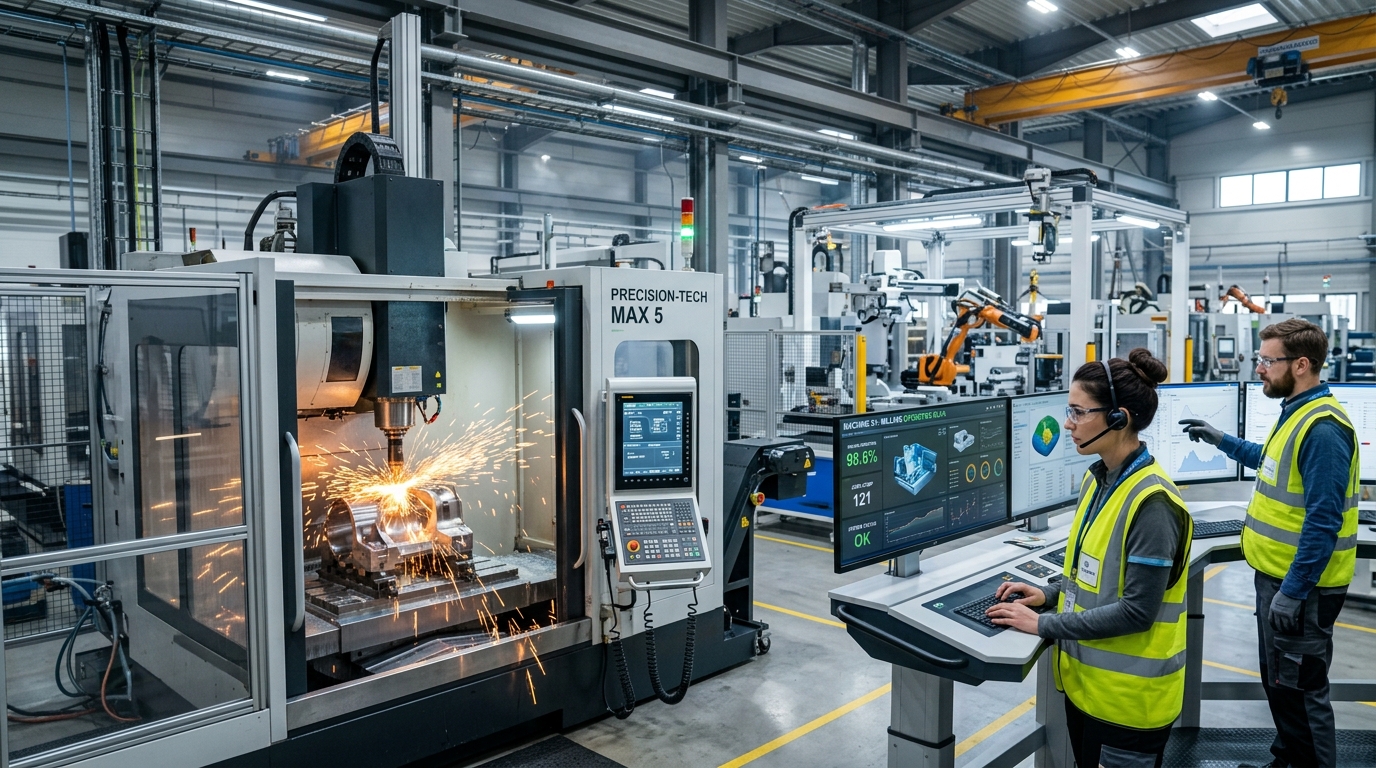
Modern manufacturing depends heavily on speed, precision, and automation. Businesses across aerospace, automotive, electronics, and medical industries now rely on advanced production systems to maintain consistent quality and improve efficiency. One of the biggest innovations driving this transformation is computer numerical control machinery.
CNC technology has changed how manufacturers design, cut, drill, shape, and produce complex parts with incredible accuracy. Unlike traditional machining methods, CNC systems use computer programming, CAD software, and automated machine tools to complete tasks with minimal human error. This makes CNC machining one of the most important developments in industrial automation and precision engineering.
Today, CNC machines are used for everything from metal fabrication and woodworking to medical device manufacturing and high-precision aerospace components. As smart manufacturing and Industry 4.0 continue to grow, CNC automation is becoming even more advanced with AI integration, IoT monitoring, and digital manufacturing systems.
This guide explains how CNC machinery works, the main types of CNC machines, their industrial applications, advantages, challenges, and future trends shaping modern manufacturing.
What Is Computer Numerical Control Machinery?
Computer numerical control machinery refers to automated manufacturing equipment controlled by computer programming and digital instructions. Instead of relying on manual operation, CNC systems use software, machine controllers, and coded commands to guide machining operations with extreme precision.
The term CNC stands for computer numerical control. These machines follow programmed instructions to perform tasks such as cutting, drilling, milling, grinding, and shaping materials. CNC machining is commonly used in industries that require consistent product quality and detailed engineering accuracy.
Before CNC technology became popular, manufacturers relied on manual machining methods. Operators had to control machine tools by hand, which increased production time and reduced consistency. Modern CNC machines solve these problems by automating production and improving repeatability. The rise of computer numerical control machinery has allowed factories to produce complex components faster while reducing waste and improving production efficiency. Today, CNC systems are considered a core part of automated manufacturing and digital production environments.
History and Evolution of CNC Technology
The development of CNC technology began during the mid twentieth century when manufacturers searched for ways to improve industrial production. Early numerical control systems used punched tape and simple machine instructions. Over time, computer integration transformed these systems into advanced automated machining centers.
Modern CNC machinery now includes real-time monitoring, smart sensors, multi-axis machining capabilities, and cloud-connected production systems. These innovations continue to improve manufacturing automation and industrial engineering processes.
Difference Between NC and CNC Machines
Traditional numerical control machines used fixed instructions with limited flexibility. CNC machines, however, use programmable software and advanced computer systems. This allows operators to modify production workflows quickly and create more complex designs. CNC technology also supports CAD and CAM integration, making automated precision engineering more efficient and scalable for industrial production.
How CNC Machinery Works
Understanding how CNC machinery works helps explain why these systems are so effective in precision manufacturing.
The CNC machining process begins with a digital design created using CAD software. Engineers use computer-aided design programs to create detailed product models and dimensions. After the design is completed, CAM software converts the model into machine-readable instructions.
These instructions are translated into G code, which tells the CNC machine how to move, cut, drill, or shape the material. The machine controller interprets these commands and guides the cutting tools during production.
Role of CAD Software
CAD software allows manufacturers to design products with precise measurements and engineering accuracy. Designers can create complex shapes and detailed product specifications before production begins. This improves workflow efficiency and reduces manufacturing errors.
CAM Software and Machine Instructions
CAM software transforms digital designs into machining instructions. It determines toolpaths, cutting speeds, and machining sequences to optimize production. CAM integration is essential in modern manufacturing automation because it helps CNC machines produce consistent results with minimal waste.
Understanding G Code in CNC Programming
G code is the programming language used by CNC systems. It controls machine movement, cutting depth, spindle speed, and positioning. Even beginner CNC programming courses focus heavily on G code because it forms the foundation of CNC machine operations.
Step-by-Step CNC Machining Workflow
- Product design creation using CAD software
- Toolpath generation through CAM software
- G code programming
- Machine setup and calibration
- Automated machining process
- Product inspection and finishing
This workflow allows CNC production systems to achieve high precision machining and efficient mass production.
Main Components of CNC Machinery
Every CNC system contains several essential components that work together during automated machining.
Control Panel
The control panel acts as the command center of the CNC machine. Operators use it to input programs, monitor operations, and adjust settings.
Machine Bed
The machine bed provides structural stability during machining operations. A rigid machine bed helps reduce vibration and improve machining accuracy.
Spindle
The spindle rotates cutting tools during production. Spindle speed directly affects cutting precision and material quality.
Axes and Motion System
Most CNC machines operate using multiple axes. Advanced multi-axis machining systems allow manufacturers to create highly complex components with improved efficiency.
Cutting Tools
Different cutting tools are used depending on the material and machining process. CNC milling, drilling, grinding, and cutting operations all require specialized tooling systems.
Feedback and Sensor Systems
Modern CNC systems use sensors and monitoring technology to improve machine calibration, accuracy, and production consistency.
Types of CNC Machines
Different industries use different CNC machine types depending on production needs.
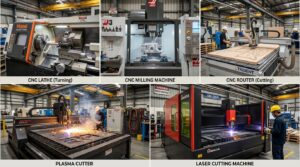
CNC Milling Machines
CNC milling machines use rotating cutting tools to remove material from a workpiece. These machines are widely used in aerospace, automotive, and industrial manufacturing.
CNC Lathes
CNC lathes rotate the material while cutting tools shape the surface. They are commonly used for cylindrical components and precision machining applications.
CNC Routers
CNC routers are popular in woodworking, sign making, and furniture production. They can cut wood, plastic, and soft metals with excellent precision.
CNC Plasma Cutters
These machines use high-temperature plasma to cut conductive materials such as steel and aluminum.
CNC Laser Cutting Machines
Laser cutting systems provide extremely accurate cuts for metal fabrication, electronics, and industrial production.
CNC Grinding Machines
Grinding machines improve surface finishing and precision engineering for complex components.
Multi-Axis CNC Machines
Advanced multi-axis machining systems offer better flexibility and faster production for intricate product designs.
Industries That Use CNC Machinery
Many industries depend on CNC automation for accurate and efficient production.
Aerospace Industry
Aerospace manufacturers use computer numerical control machinery to create lightweight and highly precise aircraft components.
Automotive Manufacturing
Automotive factories rely on CNC systems for engine components, transmission parts, and custom vehicle production.
Medical Equipment Production
Medical manufacturers use CNC machining to produce surgical instruments, implants, and precision medical devices.
Electronics Industry
CNC machines help create detailed electronic components and precision assemblies.
Woodworking and Furniture Production
CNC routers allow woodworking companies to produce detailed furniture designs and decorative products efficiently.
Metal Fabrication
Metal fabrication companies use CNC cutting, drilling, and grinding machines for industrial production and structural manufacturing.
Benefits of Computer Numerical Control Machinery
There are many reasons why CNC technology dominates modern manufacturing.
High Precision and Accuracy
CNC machines produce extremely accurate parts with minimal variation, making them ideal for high-precision machining applications.
Faster Production Speed
Automation significantly reduces production time compared to manual machining.
Reduced Human Error
Because CNC systems follow programmed instructions, there is less risk of operator mistakes.
Consistent Product Quality
Manufacturers can produce identical products repeatedly with excellent consistency.
Better Material Efficiency
Automated cutting and machining reduce material waste and improve sustainability.
Scalable Mass Production
Factories can scale production more efficiently using automated manufacturing systems.
Limitations and Challenges
Despite its advantages, CNC technology also presents certain challenges.
High Initial Investment
CNC machines and digital manufacturing systems can be expensive for smaller businesses.
Maintenance Costs
Regular maintenance is necessary to keep machines operating efficiently.
Need for Skilled Operators
Operators must understand CNC programming, machine calibration, and manufacturing workflows.
Software and Programming Complexity
Advanced CNC machining often requires specialized software knowledge.
Downtime Risks
Machine failures can interrupt production and affect manufacturing efficiency.
CNC Programming Basics for Beginners
Learning CNC programming starts with understanding machine instructions and G code fundamentals.
Beginners should focus on:
- understanding coordinate systems,
- learning machine movements,
- reading G code,
- and practicing basic machining operations.
Many online training platforms now provide beginner-friendly CNC machining lessons for students and industrial workers.
CNC Machinery and Industry 4.0
Industry 4.0 is changing how manufacturers use automation and digital production systems.
Smart Manufacturing Systems
Factories now use connected production environments to improve workflow efficiency and monitoring.
AI in CNC Machining
Artificial intelligence helps manufacturers optimize machining accuracy, reduce waste, and predict maintenance needs.
Future Trends in CNC Technology
Future CNC systems will likely include:
- advanced robotics,
- predictive maintenance,
- cloud-based automation,
- and smarter production algorithms.
The continued growth of computer numerical control machinery will play a major role in shaping modern smart factories.
CNC machines operate by using coded commands to guide the movement of tools and automate the manufacturing process with high precision.
CNC Machine Safety and Maintenance
Safe machine operation is essential in industrial manufacturing environments.
Common CNC Safety Practices
Operators should:
- wear protective equipment,
- inspect tooling regularly,
- and follow the machine operating procedures carefully.
Preventive Maintenance Tips
Routine inspections help prevent costly downtime and maintain production efficiency.
Factors to Consider Before Buying
Manufacturers should evaluate:
- production goals,
- material requirements,
- software compatibility,
- and machine size.
Material Compatibility
Different machines are designed for metals, plastics, wood, or composite materials.
Production Volume Requirements
Large-scale factories may require automated multi-axis machining systems.
Budget and Operating Costs
Businesses should calculate long-term operational expenses before investing.
Software Compatibility
Modern CNC systems should integrate smoothly with CAD and CAM software.
CNC Machinery vs Manual Machining
CNC machining offers several advantages over manual production methods.
| CNC Machining | Manual Machining |
|---|---|
| Higher precision | Lower precision |
| Faster production | Slower workflow |
| Automated operations | Manual control |
| Better consistency | Variable quality |
| Reduced waste | More material loss |
While manual machining still has certain applications, CNC technology provides greater efficiency for modern industrial production.
FAQs
What Does CNC Stand For?
CNC stands for computer numerical control.
Are CNC Machines Fully Automated?
Most CNC systems automate machining operations, but operators still monitor setup and maintenance.
Is CNC Machining Difficult to Learn?
Beginners can learn CNC machining through training programs, online courses, and hands-on practice.
Conclusion
CNC technology has transformed modern manufacturing by improving precision, efficiency, and automation. From aerospace engineering to woodworking and medical device production, CNC systems continue to shape industrial production worldwide.
As smart manufacturing and Industry 4.0 expand, computer numerical control machinery will become even more advanced through AI integration, IoT connectivity, and intelligent automation systems.
Businesses that invest in CNC automation gain better production consistency, reduced waste, and improved operational efficiency. Whether you are a beginner learning CNC programming or a manufacturer exploring advanced automation, CNC technology remains one of the most valuable innovations in modern engineering and production systems.





Post Comment